

.jpg)
.jpg)

Keep in the know
Get new contortion space articles and knowledge right to your email
Oops! Something went wrong while submitting the form

Copyright © 2025 Contortion Space. All rights reserved.
This introductory guide to anatomy for contortionists explains how understanding the body's structure, bones, muscles, ligaments, and tendonshelps circus artists train more effectively and safely.
This is part of the Anatomy for Contortionists series. You can find the rest of the series at this page when the series has been released.
Understanding anatomy isn’t just for doctors and physiotherapists, it’s a powerful tool for circus artists. For contortionists in particular, knowing how the body is structured helps you train smarter, reduce injury risk, and unlock new pathways to flexibility. Let’s look at the major building blocks of the body: bones, muscles, ligaments, and tendons and why they matter when you’re folding yourself into extraordinary shapes.
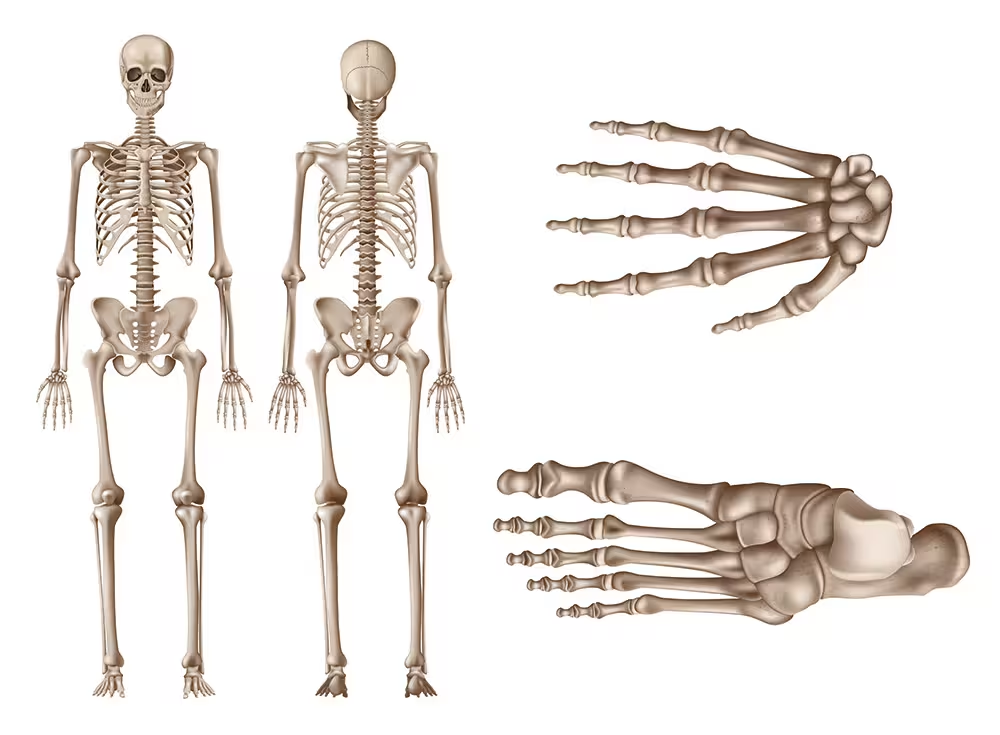
Bones are the scaffolding of your body. They give structure, provide attachment points for muscles, and form the joints that allow movement.
Why it matters: Bone structure sets the possibility for your movement. Training expands range within safe limits, but no amount of stretching can change the shape of your bones and the depth of joints such as your hip. Recognising natural limits helps you work with your body rather than against it.
Muscles are the active tissues that contract, relax, and lengthen to create movement. For contortionists, muscles are both the engine of motion and the brakes that keep you from collapsing.
Why it matters: Muscles are trainable. Strengthening them provides joint support, and conditioning them for endurance allows you to hold demanding poses gracefully. Flexibility is not just about “stretching out” a muscle, but also about teaching it to control lengthened positions.
Ligaments are strong bands of connective tissue that connect bone to bone, forming the stabilising walls of your joints.
Why it matters: You can’t train ligaments the way you train muscles. Protect them by building strong muscular support around your joints, listening to pain signals, and progressing gradually. Ligaments take a long time to heal too, so you really want to take care of them to prevent having to take long periods of time out of training.
Tendons are the cords that connect muscles to bones. When your muscle contracts, the tendon transmits that force to the skeleton, making movement possible.
Why it matters: Tendons thrive on gradual, progressive load. Rushing into deep stretches without sufficient preparation puts them at risk. Gentle conditioning, eccentric strength (lengthening under tension), and consistent warm-ups help keep tendons resilient.
Think of your body as a performance team:
For circus artists, success lies in respecting each element. A contortionist who understands anatomy doesn’t just bend further — they bend smarter, balancing flexibility with strength and control.
✨ Key Takeaways for Contortionists
Get new contortion space articles and knowledge right to your email
Oops! Something went wrong while submitting the form